
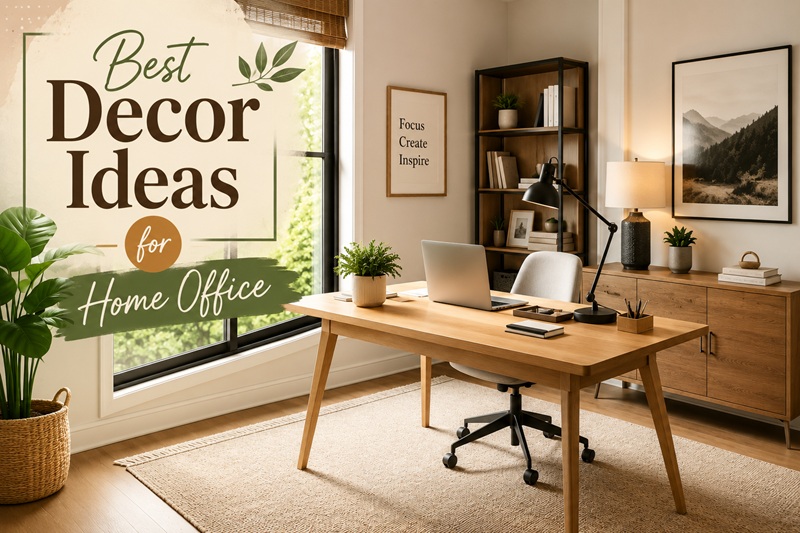
A home office is one of the few rooms in a house that has to do two jobs at once. It needs to support focus, productivity, and long hours of work, while still feeling like a comfortable, pleasant part of your home rather than a sterile corporate cubicle dropped into a spare room. Getting that balance right is the entire challenge of home office decorating.
The good news is that a well-designed home office does not require a large budget or a dedicated room. Whether you have an entire room to work with or a corner of a living space, these decor ideas will help you build a home office that genuinely supports the way you work while looking like somewhere you actually want to spend your time.
Start With the Desk and Its Placement
The desk is the heart of any home office, and where you place it matters as much as which one you choose. Positioning a desk to face or sit near a window takes advantage of natural light, which improves mood, reduces eye strain, and makes a workspace feel open rather than confined.
When choosing the desk itself, prioritize the surface area and storage your actual work requires. Someone who works primarily on a laptop has very different needs than someone who handles paperwork, runs dual monitors, or does creative work that spreads across a large surface. A clean-lined desk in a warm wood or a simple neutral finish suits almost any decor style and keeps the focus on function.
For smaller spaces, a wall-mounted folding desk or a compact writing desk can create a functional workspace without dominating a room. The placement principle remains the same: position it to make the most of natural light and to give you a pleasant view rather than facing a blank wall whenever possible.
Invest in a Good Chair
If there is one place in a home office where spending more genuinely pays off, it is the chair. You may spend more waking hours in your office chair than anywhere else in your home, and a poor one leads to discomfort, poor posture, and back pain over time.
An ergonomic chair that supports the lower back, adjusts to your height, and encourages good posture is one of the most important investments you can make. From a decor standpoint, a good chair does not have to look like industrial office equipment. Many ergonomic chairs now come in designs and finishes that complement home interiors, and a well-chosen chair can be both supportive and visually appropriate to the room.
For those who find traditional office chairs unappealing, an upholstered chair with good support, paired with attention to desk height, can work for lighter workloads while blending more naturally into a home setting.
How Do You Make a Home Office Feel Less Like a Cubicle?

This is the question at the core of home office decorating, and the answer lies in deliberately bringing in the warmth and personality that corporate offices lack.
Layered lighting is the single most transformative element. Relying on a single overhead light creates the flat, clinical feel of an office building. Combining natural light, a dedicated task lamp for focused work, and a softer ambient light source such as a small table or floor lamp creates depth and warmth, and lets you adjust the atmosphere depending on the time of day and the kind of work you are doing.
Personal touches make the space yours. Framed photographs, artwork you genuinely like, a few meaningful objects, and items that reflect your interests turn a generic workspace into one that feels personal and motivating. The goal is a space that inspires you rather than one that feels like an extension of an employer’s building.
Natural elements add life. Plants are particularly effective in a home office, bringing color, freshness, and a connection to nature that softens the functional hard surfaces of a work setup. Easy-care plants like snake plants, pothos, or a small desktop succulent require little attention while making a noticeable difference to how the space feels.
Warm materials and texture matter too. A wooden desk, a soft rug underfoot, textile elements like a cushion or throw on a side chair, and natural materials throughout counterbalance the technology and hard surfaces that dominate most workspaces.
Get Storage and Organization Right
Clutter is the enemy of both productivity and good-looking decor, which makes storage one of the most important elements of a home office. A cluttered desk creates visual noise that makes focus harder and a room feel chaotic.
The principle is to give everything a home and keep most of it out of sight. Closed storage, such as cabinets, drawers, and boxes, keeps supplies and paperwork accessible but hidden, maintaining a clean visual field. Floating shelves provide storage and display space without taking up floor area, which is especially valuable in smaller offices. Cable management, tucking away and bundling the tangle of cords that accompanies modern work, makes a dramatic difference to how tidy a workspace looks.
Vertical space is often underused in home offices. Wall-mounted shelving, pegboards, and organizers take advantage of walls to keep the desk surface clear and the floor open, which is particularly useful when working with limited square footage.
Choose a Color Scheme That Supports Focus
Color has a real effect on mood and concentration, which makes it a meaningful decorating decision in a workspace. The best home office color schemes balance calm with energy.
Soft, muted tones such as warm whites, soft grays, sage greens, and gentle blues create a calm, focused environment without feeling sterile. Blues and greens in particular are often associated with concentration and a sense of calm, making them popular choices for workspaces. Against this calm backdrop, a few accent colors introduced through accessories, art, or a single feature can add energy and personality without becoming distracting.
The approach mirrors good decorating generally: a restrained, calming foundation with deliberate accents, rather than a busy, high-contrast scheme that competes for attention while you are trying to work.
Create a Functional Zone in a Shared Space
Not everyone has a dedicated room to turn into an office, and a great deal of home office decorating involves carving a functional workspace out of a corner of a living room, bedroom, or other shared space.
The key is defining the work zone visually so it feels distinct from the surrounding room. A rug under the desk, a small bookshelf or screen acting as a divider, or a consistent color scheme within the work area helps separate it from the rest of the space. Choosing furniture that fits the scale of the corner, and using vertical storage to keep the footprint small, allows a fully functional office to occupy a surprisingly compact area.
When the workspace shares a room used for relaxation, the ability to visually close down the office at the end of the day matters for wellbeing. A desk that can be tidied completely, or a setup that can be partially concealed, helps maintain the separation between work and rest even within a single room.
Finishing Touches That Make the Difference
The details are what elevate a functional workspace into one that feels considered and inspiring. A few well-chosen finishing touches go a long way.
A statement piece of art or a pinboard of inspiration gives the eye somewhere to rest and adds personality. A quality desk accessory set, a pen holder, a notebook, a desk mat, in materials and colors that match the room ties the workspace together. A small clock, a candle or diffuser, and a single sculptural object add character. Soft furnishings such as a window treatment that filters light pleasantly and a comfortable textile element complete the sense that this is a room within a home rather than a workstation.
The aim throughout is a workspace that supports productivity while remaining a genuinely pleasant place to be, because a home office you enjoy is one you will work in more comfortably and more willingly.
Frequently Asked Questions
What is the most important element of a home office?
A supportive ergonomic chair and good desk placement near natural light are the two most important elements. They affect your comfort, health, and productivity more than any decorative choice.
How do I set up a home office in a small space?
Use a compact or wall-mounted desk, take advantage of vertical storage to keep the floor and desk clear, and define the work zone with a rug or small divider. A functional office can fit into a surprisingly small corner.
What colors are best for a home office?
Calm, muted tones such as soft greens, gentle blues, warm whites, and soft grays support focus without feeling sterile. Add energy and personality through a few accent colors in accessories and art.