
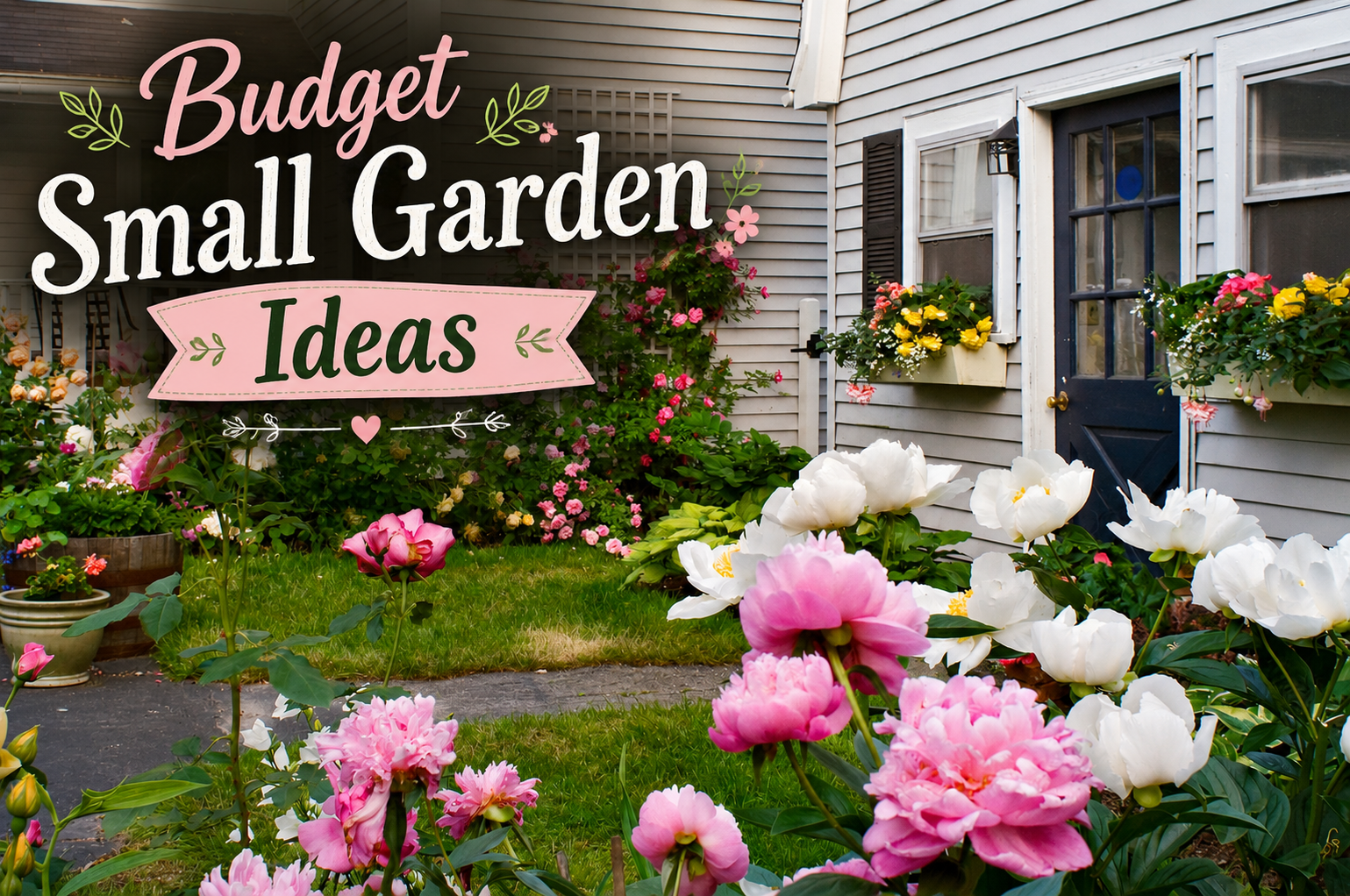
A small garden and a tight budget are not the limitations they appear to be. Some of the most beautiful gardens in existence are small, and many were made without significant expenditure. What they share is something that money cannot directly buy: intention. Every plant placed with purpose, every path laid with an understanding of how people move through the space, every seating area positioned for the light it catches at the right time of day.
The ideas in this guide are practical and achievable without professional help or a large budget. They range from single-afternoon projects to weekend undertakings, and they cover the full range of a small garden — structure, planting, paving, lighting, vertical space, and the small details that give a garden its character.
Start With a Clear Plan Before Spending Anything
The single most valuable thing you can do for a small garden on a budget costs nothing: spend time in it before spending money on it. Observe where the sun falls at different times of day. Notice which corners are sheltered and which are exposed. Understand where the natural movement through the space wants to go. A path placed where people already walk costs less to maintain than one placed where a plan said it should go.
A simple sketch of the garden on paper — drawn to rough scale, with the house, boundaries, and any existing features marked — gives you a framework for making decisions. It shows you how much paving you actually need, where a single focal point would anchor the space, and whether the budget is better spent on structure or on planting.
In a small garden, the temptation is to fill every available surface immediately. Restraint at the beginning almost always produces better results than enthusiasm. Buy fewer plants of better quality, chosen specifically for the conditions of your garden, rather than many plants chosen for their immediate appearance at the garden centre.
Gravel: The Most Cost-Effective Hard Landscaping Material Available
Gravel is consistently cited by landscapers and garden designers as one of the smartest low-cost materials for small outdoor spaces, and it earns that reputation honestly. It is inexpensive, easy to lay without professional help, drains well, suppresses weeds when laid over landscape fabric, and looks genuinely good in a wide range of garden styles — from contemporary minimalist to cottage informal.
For a small garden, a gravel surface with well-chosen planting emerging through it or bordering it creates an immediately finished appearance at a fraction of the cost of paving slabs or decking. The key is preparation: level the ground properly, lay good-quality landscape fabric before adding the gravel, and use a depth of at least two to three inches to prevent the fabric showing through. Skipping these steps produces a result that looks temporary rather than intentional.
Gravel comes in a range of sizes and tones. Pea gravel is soft and informal, suited to cottage-style gardens. Angular white or grey crushed stone reads as more contemporary and pairs well with clean-lined planting. Golden gravel warms a north-facing garden where light is limited. The choice should relate to the style of the house and the character you want the garden to have — buying a bag from a local supplier before committing to a larger quantity lets you see the colour accurately in your own garden’s light.
Combined with simple timber edging boards to contain it, a gravel surface with emerging perennials, ornamental grasses, or low structural shrubs is one of the most achievable and satisfying budget garden transformations available.
Raised Garden Beds: High Return on Low Investment
Raised beds are one of the best uses of a small garden budget, whether the intention is to grow vegetables, cut flowers, herbs, or ornamental planting. A simple timber-framed raised bed costs relatively little in materials, can be built in a single afternoon, and immediately brings structure and organisation to a small outdoor space.
The practical advantages of raised beds in a small garden are significant. They allow you to fill the bed with the right soil for what you want to grow, regardless of what your underlying ground soil is like. They warm up faster in spring than ground-level planting, extending the growing season. They bring planting up to a height that is easier to maintain. And in a small garden, the clean lines of a raised bed frame give the space a sense of design intention that a ground-level planting border sometimes lacks.
Timber is the most affordable building material for raised beds. Untreated softwood is the cheapest option and will last several years before degrading. Pressure-treated timber lasts longer and is worth the modest additional cost for a permanent structure. Scaffold boards — widely available second-hand from timber merchants and online marketplaces — are an excellent budget option that also look good, with their weathered surfaces adding immediate character.
For a small garden, one or two well-proportioned raised beds are more useful than several small ones. A bed at least four feet wide allows planting on both sides without needing to step into it. A depth of twelve inches is sufficient for most vegetables and perennials. In a very small garden, a single large raised bed placed along one boundary can function simultaneously as a planting space, a visual focal point, and a partial screen that creates the feeling of depth.
DIY Garden Paths: Structure for Almost Nothing
A garden path does two things simultaneously: it tells people where to walk, and it gives the garden a sense of design structure. In a small garden, even a short path leading from one area to another changes the experience of the space completely — it creates destination and movement where previously there was just open ground.
The most budget-friendly path options are stepping stones, reclaimed brick, and inexpensive concrete pavers laid on a prepared base. Stepping stones work particularly well in informal or naturalistic garden styles, where they can be set into low planting or a gravel surface rather than laid in a strict line. Reclaimed brick laid in a simple running bond pattern has an immediate warmth and character that new engineering brick cannot replicate, and it is often available for very little at reclamation yards and salvage companies.
The preparation of the base is what separates a path that looks good for years from one that subsides and becomes uneven within a season. Remove the topsoil to a depth of four to six inches, compact the base, add a layer of compacted hardcore or sharp sand, and then lay the surface material. The effort is worth it. A path laid directly on unprepared ground will shift and heave with the first winter frost.
Border a path with low planting — lavender, catmint, low ornamental grasses — and the path immediately becomes part of the garden’s planting scheme rather than a purely functional strip. Even the most modest path, bordered by well-chosen planting, reads as a deliberate design choice.
Vertical Gardening: Making the Most of Boundaries and Walls
In a small garden, the boundaries — fences, walls, and the sides of outbuildings — are some of the most valuable growing and decorating surfaces available. Using them well can double the planting area of a garden without using any additional floor space.
The simplest and least expensive approach is to fix horizontal wires or a simple timber trellis panel to the fence or wall and train climbing plants up them. Annual climbers grown from seed — sweet peas, nasturtiums, morning glory — are among the cheapest plants you can grow and produce a generous coverage of flower and foliage within a single season. Perennial climbers — clematis, climbing roses, wisteria — cost more to establish but return year after year with increasing vigour.
A more immediate option for vertical growing is a pallet planter. A timber pallet stood upright against a fence, lined with landscape fabric, and filled with compost provides planting pockets for herbs, strawberries, succulents, or trailing plants at virtually no cost. Pallets are often available free from garden centres, hardware stores, or commercial premises that receive deliveries on them. The result, when planted up and established, looks intentional and creative rather than improvised.
Hanging baskets and wall-mounted planters extend the vertical planting surface further. In a small courtyard or paved garden where ground-level planting space is limited, a well-planted wall covered with mounted containers and climbing plants transforms a bare boundary from a limitation into one of the garden’s most interesting features.
Seating Areas: Creating a Destination on a Small Budget
A garden without somewhere to sit is a space to look at rather than a place to be. Even the smallest garden benefits enormously from a defined seating area — a spot that invites you to stop, put something down, and stay.
The seating area does not need to be large. Two chairs and a small table, placed in the sunniest corner of the garden or the most sheltered spot, is enough. What gives a small seating area its character is the definition of the space around it: a surface underfoot that is different from the rest of the garden, planting that encloses it on two or three sides, and lighting that makes it usable in the evenings.
A simple paved or gravelled area measuring around six feet square can accommodate two chairs and a small bistro table. Laying it yourself using concrete pavers or reclaimed stone, on a prepared base, is a weekend project that requires no specialist skills and produces a result that looks permanent and intentional.
String lights are one of the most affordable and transformative evening garden elements available. For a modest outlay, a set of warm-white outdoor string lights draped above a seating area turns an ordinary corner into somewhere that draws people outside after dark. Solar-powered options require no electrical work — simply anchor the lights at a suitable height and let them charge during the day.
A fire bowl or chiminea extends the usable season of a garden seating area into the cooler months. Both are available at very modest prices and serve the double purpose of heat source and focal point. A fire bowl placed at the centre of a seating arrangement changes the social dynamic of the space in the same way that a fireplace changes a living room — it gives people something to gather around.
Planting on a Budget: Strategies That Work
Plants are often the largest single cost in a garden project, and they are also the area where the most budget savings can be made without compromising the result.
Grow From Seed
Seeds are the cheapest way to produce large numbers of plants. Annual flowers — cosmos, zinnias, nasturtiums, sweet peas, sunflowers — produce enormous quantities of flower for the cost of a packet of seeds and a bag of compost. Many vegetables are equally economical from seed. A packet of mixed salad leaves costs less than a single pot of mixed salad from a supermarket and will produce cuttings for months. Perennials can also be grown from seed, though they take longer to reach flowering size — a worthwhile investment if you are not in a hurry.
Buy Small and Wait
A small plant in a nine-centimetre pot costs a fraction of the same plant in a three-litre container. The difference in establishment time in good growing conditions is often less than people expect. For shrubs and perennials that will remain in the ground for many years, buying small and giving them time to establish produces plants that are better adapted to your garden’s specific conditions than larger, pot-bound specimens.
Divide Existing Plants
If you already have any perennials in the garden, dividing them in autumn or early spring is entirely free and produces multiple plants from one. Most herbaceous perennials — hostas, geraniums, grasses, sedums, astilbes — respond well to division and return more vigorously after it. Neighbours, friends, and local plant swap groups are excellent sources of divided perennials at no cost.
Choose Perennials Over Annuals for Permanent Planting
Annuals are excellent for seasonal colour at low cost, but they need replacing each year. For permanent planting — the structure and framework of the garden — investing in long-lived perennials and shrubs, even if they cost slightly more initially, produces a garden that requires less replanting and fewer repeat purchases over time.
Native and Drought-Tolerant Plants
Native plants are adapted to local soil and climate conditions, which means they typically establish faster, require less watering, and are less prone to pest and disease problems than exotic alternatives. They are also often cheaper to buy, as they are more widely grown by nurseries. Drought-tolerant plants — lavender, sedum, ornamental grasses, salvias, agapanthus — reduce ongoing water costs, which in a dry summer can add up significantly.
Lighting: Maximum Impact at Minimum Cost
Garden lighting is one of the areas where a small investment produces the most disproportionate visual return. A garden that is invisible after dusk becomes a usable and beautiful space with very modest expenditure on lighting.
Solar-powered stake lights along a path, string lights above a seating area, and a single solar lantern on a table or wall mount are enough to transform a small garden’s evening character entirely. The warm glow of string lights in particular does more for the atmosphere of a small garden than almost any other single addition.
For a more considered approach, position lighting to highlight specific features — a well-chosen pot, a particularly beautiful plant, the texture of a wall or fence. A single spotlight on a focal point creates depth and drama that uniform overhead lighting cannot achieve.
Focal Points: One Good Object Goes a Long Way
Every successful garden, however small, has at least one focal point — something the eye travels to, rests on, and returns to. In a large garden, this might be a specimen tree, a stone sculpture, or an architectural water feature. In a small budget garden, it can be something far more modest: a large pot planted with something striking, a simple obelisk supporting a climbing rose, a painted wall, a well-placed mirror that reflects the garden back on itself.
A single large pot — terracotta, glazed ceramic, or a good-quality plastic that reads as stone — planted with an architectural plant, a standard topiary, or a seasonal combination of height and trailing habit costs relatively little and creates an immediate centrepiece. It can be moved as the garden changes, requires no installation, and delivers the kind of visual anchor that holds a small space together.
A mirror fixed to a fence or wall with a simple frame creates the impression of a window into another garden, doubling the perceived depth of the space. This is a particularly useful trick in a narrow courtyard or enclosed garden where the boundaries press close on every side.
The Essentials of a Budget Small Garden
The ideas above share a set of underlying principles that apply regardless of the specific approach you take.
Spend money on structure first. Paving, paths, boundaries, and built features last for years. Plants can be added gradually and inexpensively over time. A well-structured garden with modest planting looks more intentional than a poorly structured garden with abundant planting.
Choose quality in the things you cannot replace. A well-made raised bed, a good terracotta pot, a permanent piece of furniture that will last decades — these are worth spending more on than fast-fashion garden accessories that will look cheap within a season.
Maintain what you have. A small garden that is regularly tidied, weeded, and pruned looks more beautiful at any budget level than one that is expensively planted but poorly maintained. The most impactful garden improvement available at zero cost is removing what is dead, damaged, or no longer contributing.
Edit ruthlessly. A small space with fewer, better-chosen elements always looks more deliberate than a small space crammed with variety. The restraint that small budgets sometimes force is often exactly the design discipline that produces the best result.