
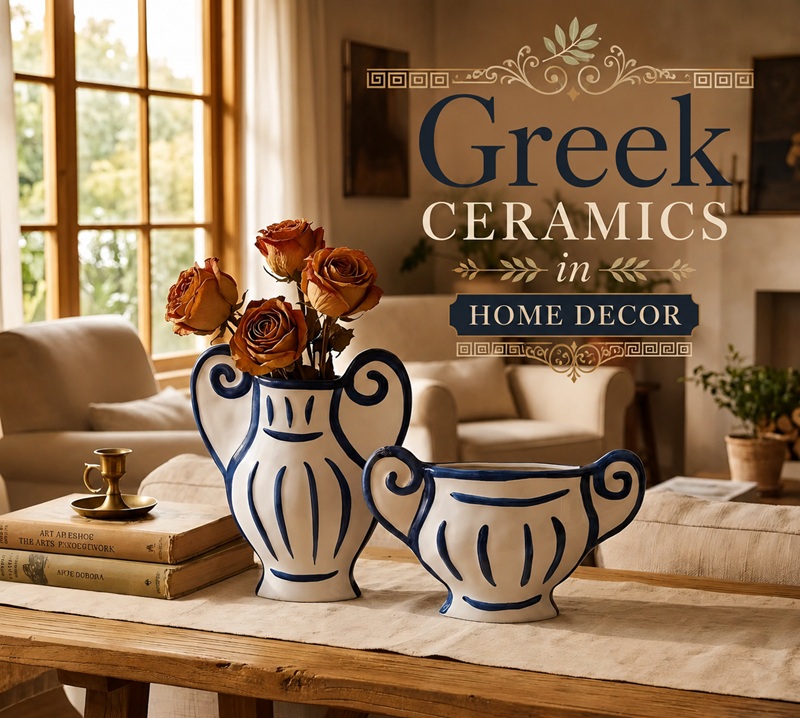
Few decorative objects carry as much timeless beauty and effortless character as Greek ceramics. From simple terracotta vessels to elegant blue and white pottery, these pieces bring the sun-warmed charm of the Mediterranean into a home, adding texture, history, and a handmade quality that mass-produced decor simply cannot match. Whether displayed as a single striking vase or gathered into a curated collection, Greek ceramics have a way of making a space feel both relaxed and refined.
This guide explores the appeal of Greek ceramics in home decor, the different types and styles, and how to incorporate them beautifully into your home, whether you are drawn to a full Mediterranean aesthetic or simply want to add a few characterful accents.
Why Greek Ceramics Work So Well in the Home
Greek ceramics have an enduring appeal in interior decorating, and understanding why helps in using them well. These pieces bring several qualities to a space at once, which is what makes them such versatile and rewarding decorative objects.
First and foremost, Greek ceramics carry a sense of history and craftsmanship. Rooted in one of the oldest pottery traditions in the world, they have a handmade, artisanal quality that adds authenticity and soul to a space. Even contemporary Greek-style ceramics echo this heritage, lending a room a feeling of timelessness and character.
They also bring texture and natural warmth. The earthy quality of terracotta, the smooth glaze of a painted vessel, and the organic, slightly imperfect forms of handmade pottery add tactile richness to a room, softening modern interiors and complementing natural materials beautifully. And their connection to the Mediterranean evokes a relaxed, sunlit, coastal feeling, bringing a sense of calm and easy elegance wherever they are placed. For all these reasons, Greek ceramics suit an enormous range of interiors, from full Mediterranean schemes to modern, rustic, and eclectic spaces.
The Main Types of Greek Ceramics
Greek ceramics come in several distinct styles, each with its own character and best uses in the home. Understanding them helps in choosing pieces that suit your space.
Terracotta pottery is perhaps the most iconic, the warm, earthy, reddish-brown clay vessels seen throughout Greece and the wider Mediterranean. From simple pots and urns to large olive jars and planters, terracotta brings rustic, natural warmth and is wonderfully versatile, working both indoors and out.
Blue and white ceramics are another beloved style, echoing the famous colors of the Greek islands, the white of the buildings and the blue of the sea and sky. These pieces, whether patterned or plain, capture the classic coastal Greek aesthetic and pair beautifully with the white-and-blue palette of Mediterranean interiors.
Glazed and painted ceramics offer richer color and decoration, often featuring traditional patterns, geometric designs, or nature-inspired motifs in blues, greens, ochres, and earthy tones. White and cream ceramics, in simple elegant forms, offer a more understated, contemporary take that suits minimalist and modern spaces. And decorative pieces inspired by ancient Greek pottery, with classical forms and motifs, bring a sense of antiquity and artistry. Together, these styles offer options for almost any interior.
How Do You Decorate With Greek Ceramics?
Incorporating Greek ceramics into a home is wonderfully flexible, and a few key approaches help you use them to best effect. The beauty of these pieces is that they work whether used sparingly as accents or gathered into fuller displays.
For a single statement, a large, beautiful ceramic vessel, an urn, an amphora-inspired vase, or a substantial terracotta pot, can anchor a space on its own, placed on the floor in a corner, on a mantelpiece, or as a centerpiece on a table or island. A single striking piece brings character without clutter and suits even the most minimalist interiors.
For collected displays, grouping several ceramics together creates a richer, more layered effect. Arranging a cluster of vessels in varying heights and shapes on a shelf, sideboard, or table, ideally in odd numbers and with a sense of balance, makes a beautiful vignette. Mixing sizes and forms while keeping a cohesive palette, all terracotta, or all blue and white, or a harmonious earthy mix, keeps the grouping feeling intentional rather than random.
Greek ceramics also work beautifully in functional roles. Bowls can hold fruit or sit as sculptural objects, vases can display simple greenery such as olive branches or dried grasses, jars and canisters can bring style to a kitchen, and pots can house plants and herbs. Using ceramics functionally as well as decoratively integrates them naturally into daily life and enhances their charm.
Where to Use Greek Ceramics in Your Home
Greek ceramics suit almost every room, and knowing where they shine helps in planning their use. Each space offers its own opportunities for these characterful pieces.
In the kitchen, terracotta and glazed ceramics feel entirely at home, whether as canisters, bowls of fruit, olive jars, or herb pots on a windowsill, adding warmth and Mediterranean charm to the heart of the home. On a kitchen island or dining table, a ceramic bowl or vase makes a lovely centerpiece.
In the living room, a statement vessel on the mantel, a collection on a shelf, or a large floor vase in a corner adds texture and character. In entryways and hallways, a beautiful ceramic piece on a console table creates a welcoming first impression. Bathrooms benefit from smaller ceramics holding toiletries or simply adding a spa-like, natural touch. And outdoors, terracotta pots and vessels bring the Mediterranean spirit to patios, terraces, and gardens, reinforcing the indoor-outdoor connection so central to the Greek aesthetic.
Pairing Greek Ceramics With Different Styles
One of the great strengths of Greek ceramics is their versatility across decorating styles, and understanding how they work with different aesthetics helps in using them successfully.
In a Mediterranean or coastal interior, Greek ceramics are a natural fit, reinforcing the white-and-blue palette, natural materials, and relaxed, sunlit atmosphere of the style. In a rustic or farmhouse space, earthy terracotta and handmade pottery complement the natural materials, warm tones, and homespun charm beautifully.
In a modern or minimalist interior, a single sculptural ceramic piece in a clean form, whether a simple white vessel or an elegant terracotta vase, adds warmth and organic character that softens the clean lines without cluttering the space. In an eclectic or bohemian interior, a mix of Greek ceramics in varied styles, colors, and patterns adds to the layered, collected, characterful look. And in a traditional or classical interior, pieces inspired by ancient Greek forms bring elegance and a sense of history. Whatever the style, choosing ceramics that echo the room’s palette and materials ties them in seamlessly.
Choosing and Caring for Greek Ceramics
A few practical considerations help in selecting and maintaining Greek ceramics so they bring lasting beauty to a home. When choosing pieces, considering the scale relative to the space matters, with larger statement pieces suiting bigger rooms and smaller vessels working as accents or in groupings. Selecting a cohesive palette or a deliberate mix keeps a collection feeling intentional, and favoring handmade or artisanal pieces, where possible, brings the authentic character and subtle imperfections that give ceramics their soul.
In terms of care, most decorative ceramics simply need occasional dusting, while glazed pieces can usually be wiped clean. Unglazed terracotta is porous and may benefit from a little more care, particularly if used with water or plants, where a liner or saucer helps protect surfaces. Handling ceramics gently and displaying them where they are stable and secure protects these often handmade and sometimes antique pieces. With minimal care, Greek ceramics endure beautifully, becoming cherished elements of a home for years.
Frequently Asked Questions
What are Greek ceramics good for in home decor?
Greek ceramics add history, texture, natural warmth, and Mediterranean character to a home. They work as statement pieces, collected displays, or functional objects like bowls, vases, jars, and planters, and suit a wide range of styles from Mediterranean and rustic to modern and eclectic.
How do you display Greek ceramics?
Use a single large vessel as a statement piece, or group several in varying heights and shapes for a layered display, ideally in odd numbers with a cohesive palette. They also work functionally as fruit bowls, vases for greenery, kitchen canisters, or planters, integrating them naturally into daily life.
Do Greek ceramics only suit Mediterranean interiors?
Not at all. While they are a natural fit for Mediterranean and coastal styles, Greek ceramics also work beautifully in rustic, modern, minimalist, eclectic, and traditional interiors. A single sculptural piece can add warmth to a clean modern space, while a collection suits a layered, characterful look.